🌿 GROWPlantWell – Nurture Nature, Transform Your Space 🌿
Understanding Carbon Farming in Australia: Insights from Real Paddock Experience
A comprehensive guide to carbon farming in Australia. Learn how soil carbon works, what practices succeed in cropping and pasture systems, realistic expectations, carbon markets, risks, and practical lessons from the paddock.
Grow Plant Well, Rashid saleem
12/13/20254 min read
Introduction: Carbon Farming Beyond the Headlines
Carbon farming has moved rapidly from a niche concept to a mainstream conversation in Australian agriculture. It is promoted as a pathway to climate resilience, soil health improvement, and new income through carbon markets. While these opportunities are real, carbon farming is often misunderstood and oversimplified.
From on-ground experience, successful carbon farming is not about chasing carbon numbers or credits. It is about building productive, resilient farming systems that naturally accumulate and protect carbon over time.
This article unpacks carbon farming from a practical perspective — what it is, how it works, where it succeeds, where it struggles, and how farmers can make informed decisions that suit their land and business.
What Is Carbon Farming?
Carbon farming refers to land management practices that:
Increase carbon stored in soils and vegetation, and/or
Reduce greenhouse gas emissions from agricultural systems
In Australia, carbon farming is often linked to the Emissions Reduction Fund (ERF) and carbon credit generation. However, most carbon-positive outcomes occur outside formal carbon projects, driven by improved agronomy and grazing management.
At its core, carbon farming is simply better management of plants, soils, and livestock.
How Carbon Enters and Leaves the Soil
The Carbon Pathway (Simplified)
Carbon enters the soil through:
Photosynthesis by green plants
Root growth and root exudates
Crop residues and pasture litter
Carbon is lost through:
Soil disturbance (cultivation)
Bare soil exposure
Erosion
Excessive oxidation driven by heat, moisture, and disturbance
Without living roots and continuous ground cover, soil carbon gains are not possible.
Understanding Soil Carbon: Forms and Stability
Not all soil carbon is equal.
Labile carbon is easily decomposed and cycles quickly
Stable carbon is protected within soil aggregates or bound to clay particles
Australian soils vary widely in their ability to stabilise carbon:
Clay soils have higher carbon-holding capacity
Sandy soils can still gain carbon, but usually at lower levels
Past management history strongly influences outcomes
This explains why carbon results differ so much between farms and regions.
Setting Realistic Expectations
One of the most important aspects of carbon farming is expectation management.
From long-term field observations:
Detectable soil carbon change often takes 5–10 years
Seasonal variability can mask real improvements
Management consistency matters more than any single practice
Carbon gains are usually incremental, not dramatic
Carbon farming rewards long-term thinking, not short-term returns.
Carbon Farming in Cropping Systems
In Australian broadacre cropping, carbon outcomes depend on system-level change, not individual inputs.
Key Principles for Cropping Systems
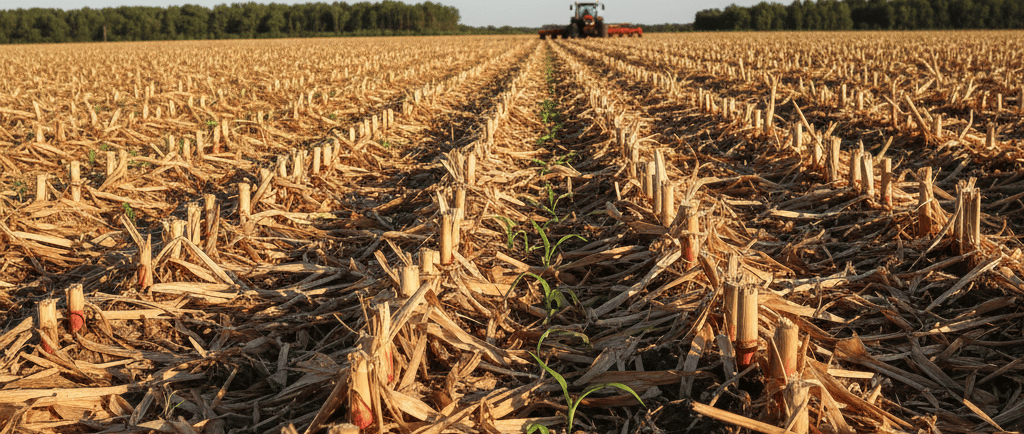
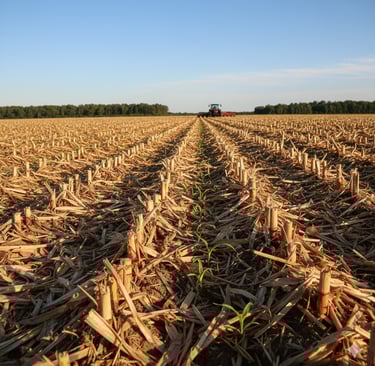
1. Stubble Retention
Protects soil surface
Reduces erosion and evaporation
Provides carbon inputs for soil biology
Burning residues removes carbon immediately and undermines soil function.
2. Increased Crop Intensity
Double cropping, cover crops, or shorter fallows
More days with active roots
Greater carbon input below ground
3. Reduced Tillage
Preserves soil aggregates
Slows carbon oxidation
Improves water infiltration
Frequent cultivation rapidly reverses carbon gains.
4. Diverse Rotations
Legumes, deep-rooted crops, and break crops
Improved nutrient cycling
Carbon input at multiple soil depths
Cropping Case Example (Queensland Grains)
A grain enterprise transitioned to zero till, retained stubble, and introduced legumes into rotation. Over eight years, soil carbon increased modestly but consistently. More importantly, infiltration improved, yield variability declined, and the system performed better in dry years. The carbon benefit was real — but secondary to system resilience.
Carbon Farming in Pasture Systems
Pastures generally offer higher carbon sequestration potential than cropping systems, particularly under good grazing management.
What Drives Carbon in Pastures?
1. Ground Cover and Recovery
Bare soil loses carbon rapidly
Maintaining cover year-round is critical
2. Grazing Management
Rest periods matter more than stocking rate
Avoiding repeated grazing at the same growth stage
Allowing full recovery improves root growth
3. Species Selection
Deep-rooted perennial grasses
Productive legumes
Greater pasture diversity
4. Soil Fertility
Carbon accumulation stalls in nutrient-poor soils
Phosphorus, sulfur, and nitrogen are common constraints
Pasture Case Example (Southern Queensland Beef)
A beef operation adopted rotational grazing with longer rest periods and improved pasture species. Soil carbon increased slowly over a decade, but the major gains were faster pasture recovery after drought, improved ground cover, and reduced supplementary feeding costs.
Soil Biology: The Engine of Carbon Farming
Soil microbes convert plant inputs into stable soil carbon.
Practices that support soil biology include:
Continuous living roots
Organic matter inputs
Minimal soil disturbance
Adequate soil moisture
Healthy soils are biologically active soils — carbon accumulation is a biological process, not a chemical one.
Fertility and Carbon: An Essential Link
Carbon farming fails when fertility is ignored.
Common limitations include:
Low phosphorus restricting biomass production
Sulfur deficiency limiting protein synthesis
Nitrogen constraints in both crops and pastures
In practice, many “carbon problems” are actually production constraints. Carbon cannot increase without sufficient plant growth.
Carbon Credits and Markets: Opportunities and Risks
Carbon markets can provide additional income, but they are complex and highly regulated.
Key Considerations
High measurement and verification costs
Long-term permanence obligations (often 25–100 years)
Reduced management flexibility
Exposure to policy and market changes
Carbon projects tend to suit farms that already:
Have strong management systems
Maintain high ground cover
Are committed to long-term land stewardship
For most producers, carbon income should be viewed as supplementary, not core business revenue.
Measurement, Monitoring, and Variability
Measuring soil carbon accurately is challenging.
Key points:
Soil carbon is spatially variable
Seasonal effects can overwhelm management signals
Long-term trend matters more than single tests
Regular soil testing, combined with paddock records and management history, provides the most reliable picture.
Carbon Farming as Risk Management
From an experienced farming perspective, carbon farming is best seen as risk management.
Farms with improving soil carbon typically show:
Better water infiltration
Greater moisture-holding capacity
Improved yield stability
Faster recovery from drought
These benefits apply regardless of carbon prices or government schemes.
Common Pitfalls in Carbon Farming
Experience highlights several recurring issues:
Expecting rapid results
Focusing on carbon numbers instead of system performance
Ignoring fertility and grazing pressure
Locking into long-term contracts without full understanding
Good carbon outcomes come from good decisions, made early and consistently.
Final Thoughts: Carbon Follows Good Farming
Carbon farming is not a shortcut, a silver bullet, or a guaranteed income stream. It is the outcome of well-managed, productive, resilient farming systems.
The most successful carbon-positive farms:
Grow plants for as long as possible
Protect soil structure
Manage grazing carefully
Think in decades, not seasons
At Grow Plant Well, our experience confirms one simple truth:
Carbon follows good farming. It rarely leads it.