🌿 GROWPlantWell – Nurture Nature, Transform Your Space 🌿
Building a Sustainable Future Through Climate Resilient Varieties and Hybrids
Learn how climate resilient crop varieties enhance yield stability, reduce climate risk, and support sustainable, future ready farming systems.
Rashid Saleem
12/5/20253 min read
Building a Sustainable Future Through Climate Resilient Varieties and Hybrids
Climate change continues to shift the way we grow food. Farmers across Australia and globally are experiencing more frequent droughts, heat waves, erratic rainfall, and emerging pest pressures. As a Research Agronomist working across diverse environments and production systems, I have seen how choosing the right variety or hybrid can be one of the most powerful tools for farm resilience.
Sustainable farming is no longer only about soil health and resource efficiency. It is also about strategic genetic choices that allow crops to perform reliably under stress. Climate resilient varieties and hybrids have become essential for maintaining productivity, reducing risk, and supporting long term environmental and economic sustainability.
Why Climate Resilient Varieties Matter
Crop variety selection has always influenced yield potential and risk. Climate resilient genetics take this a step further by offering traits that allow plants to thrive in extreme or unpredictable conditions. These varieties form a critical part of a whole farm sustainability strategy because they:
Reduce vulnerability to climate stress.
Traits such as drought tolerance, heat tolerance, improved water use efficiency, and stronger root systems help crops maintain growth when conditions deteriorate.
Support more consistent yields.
Resilient crops provide stability across seasons, which strengthens farm profitability and long term planning.
Lower the need for reactive inputs.
Stronger plants with built in resistance often require fewer pesticides, less irrigation, and fewer rescue operations.
Allow diversification and rotation flexibility.
Modern varieties expand the range of what can be grown in marginal areas or variable rainfall zones.
Lessons from the Field: What Research Shows
Across my work in breeding trials, cereal legume intercropping systems, and on farm agronomy projects, one message is clear. Genetics drive performance more than any single management input.
I have evaluated hybrids and varieties in environments ranging from rainfed rangelands to precision managed research plots. The most climate resilient genetics consistently show:
faster early vigor that helps suppress weeds and cope with early season dry spells
strong root architecture that improves nutrient and moisture extraction
tolerance to key diseases that often flare under climate stress
higher harvest index even when biomass is compromised
improved performance in heat stress during flowering and grain fill
These observations align with multi year data across national and international breeding programs. Variety selection is not a minor decision. It is a sustainability decision.
The Role of Hybrids in Climate Smart Agriculture
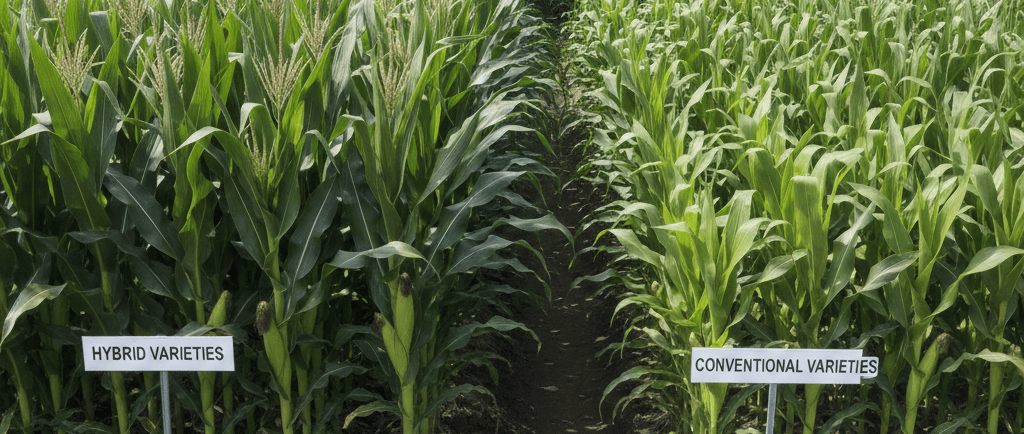
Hybrids often demonstrate exceptional resilience because of heterosis. From maize to sorghum to emerging hybrid pulse crops, the advantages of hybrids include:
higher tolerance to abiotic stress
stronger stand establishment
uniformity that improves harvest efficiency
better disease resistance packages
higher genetic yield potential
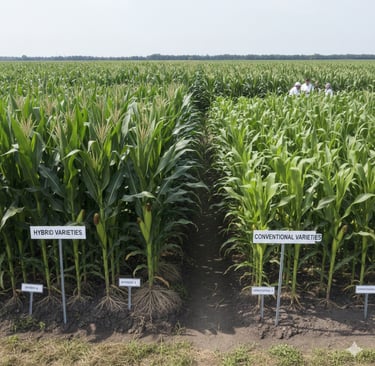
During my involvement in hybrid development projects, including indigenous maize hybrids and pulse breeding support work, hybrid performance under stress has been a recurring highlight. Even when rainfall dropped or temperatures spiked, hybrids maintained better yield stability compared with open pollinated varieties.
For farmers, this means hybrids can act as insurance against climate volatility. They optimise output per unit of land, water, and fertiliser, strengthening both economic and environmental sustainability.
Integrating Climate Resilient Varieties into Sustainable Farming
Sustainable agriculture is a system. When climate resilient genetics are combined with soil health principles and efficient resource use, the results are magnified.
1. Start with region specific variety trials
Local trials offer insights into performance under local moisture patterns, soil constraints, and pest pressures. Farmers should participate in or follow results from regional trial networks to select the right genetics for their conditions.
2. Pair resilient genetics with healthy soils
Even the best variety underperforms in degraded soils. Practices like cover cropping, stubble retention, and rotational diversity enhance the environment in which varieties express resilience traits.
3. Use precision agriculture tools
Decision support systems, sensor data, and remote sensing help track crop development and stress responses. This allows timely management adjustments that align with each variety’s growth pattern and stress thresholds.
4. Diversify with multi genotype strategies
Planting multiple varieties or hybrids with different maturity groups and stress tolerances spreads risk. This approach has repeatedly proven effective in research and commercial farms.
5. Match varieties to enterprise goals
Some varieties are designed for maximum yield, others for water limited environments, and some for disease hot spots. Variety choice should match the farmer’s risk profile and market targets.
A More Resilient Future for Farmers
Climate resilient varieties and hybrids are not a future concept. They are available now and already transforming production systems. When combined with sustainable farming practices, they provide powerful protection against climate uncertainty.
From my work leading multi agency research projects and working closely with breeding teams, I have seen how strategic genetic selection can unlock long term sustainability. It reduces input needs, increases adaptability, and supports the productivity farmers need to remain profitable.
Sustainability is built from the soil up and from the seed out. The farmers who embrace climate resilient genetics today are the ones who will thrive in the agriculture of tomorrow.